
Advertising Has Entered Its AI Era – And the Old Playbook No Longer Works
For years, digital advertising has followed a familiar rhythm. Brands competed for attention across search engines, social platforms, video networks, and e-commerce sites. Success meant mastering keywords, bids, audiences, and placements. The channels evolved, but the underlying system stayed largely the same.
That stability is gone.
Artificial intelligence is quietly rebuilding how people discover information, evaluate options, and make decisions. Instead of clicking through links or scrolling feeds, consumers are increasingly asking AI systems to think with them to summarize, compare, recommend, and decide. And where decisions go, commercial influence inevitably follows.
Advertising isn’t disappearing. It’s being re-designed.
What we’re witnessing isn’t just a new channel it’s a new interface for influence, with different rules, risks, and opportunities.
From Browsing to Asking: The Shift That Changes Everything
The biggest change isn’t technological — it’s behavioral.
Consumers are spending less time navigating digital destinations and more time interacting with AI systems that collapse search, research, and recommendation into a single experience. Instead of managing the journey themselves, users delegate it to models that interpret intent and surface answers.
That subtle shift rewires advertising mechanics:
- Visibility is no longer about ranking on a page
- Discovery is no longer driven by clicks
- Consideration happens inside synthesized responses
- Choice is shaped before a brand’s site is ever visited
AI systems don’t just show options they filter, prioritize, and frame them.
For brands, this means the fight for attention is being replaced by a fight for selection.
The Rise of the AI Attention Layer
As AI becomes the front door to digital activity, a new attention layer is forming — one that sits above traditional media channels and increasingly determines which brands even enter consideration.
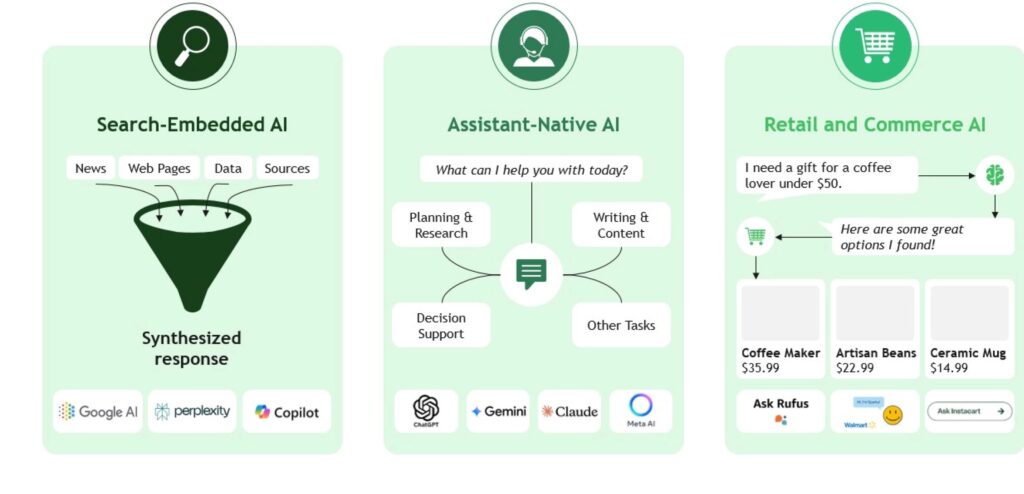
This layer shows up across three core environments:
1. AI-Augmented Search
Search engines are evolving from link directories into answer engines. AI-generated summaries now absorb intent before users ever see organic results. Commercial placements are moving upstream into the answer itself where relevance is determined by model interpretation, not just keywords.
2. Assistant-Led Experiences
General-purpose assistants are becoming daily decision partners helping people plan trips, compare products, research vendors, and organize work. These systems don’t interrupt users with ads; they guide them with suggestions. That difference matters.
3. AI-Driven Commerce
Retail is shifting from product grids to goal-based conversations. Shopping agents translate intent (“healthy dinners for a family of four”) into curated outcomes. In this world, influence is earned through data quality, availability, and compatibility with the agent — not shelf placement.
Together, these environments form the AI attention stack where time, trust, and decision-making now concentrate.
Advertising Inside AI Doesn’t Look Like Advertising
One of the biggest mistakes brands can make is assuming AI advertising will resemble search or social ads.
It won’t.
In AI interfaces, commercial influence appears in subtler, more integrated ways:
- Sponsored recommendations embedded in answers
- Paid suggestions framed as next steps
- Brand options included in comparisons or summaries
- Agent defaults that quietly favor certain products or services
In many cases, users won’t experience these as “ads” at all they’ll experience them as guidance.
That makes relevance and restraint non-negotiable. Overreach doesn’t just annoy users it erodes trust in the system itself.
Trust Becomes the New Performance Metric
AI interfaces are different from feeds and banners because users treat them like advisors. When people ask complex questions — about finances, health, software, or major purchases they expect neutrality and clarity.
This introduces a higher bar for brands:
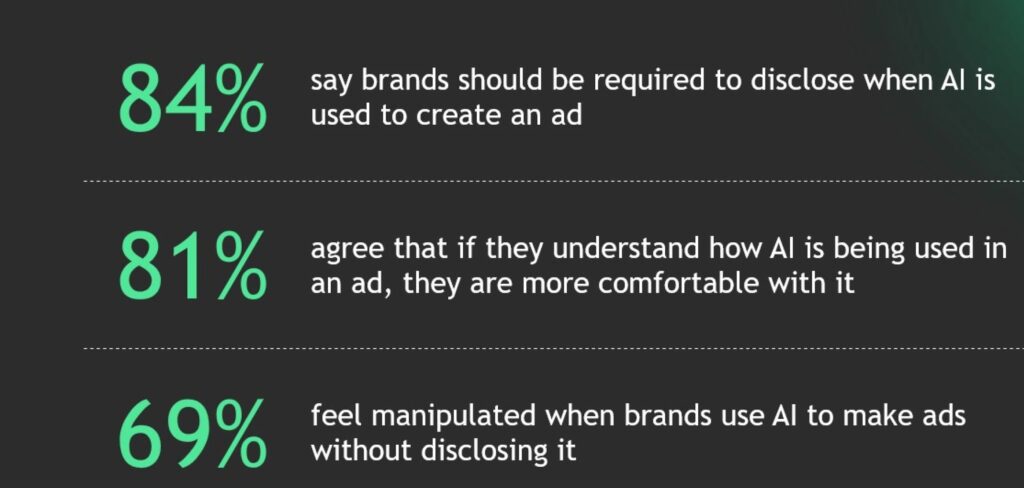
- Disclosure must be clear
- Recommendations must be defensible
- Data usage must be transparent
- Targeting must feel appropriate, not invasive
In AI-driven environments, credibility compounds and so does distrust.
New insight:
Brands that optimize purely for exposure will lose. Brands that optimize for helpfulness will win. AI rewards inputs that genuinely improve decision quality not just those that pay the most.
Why High-Consideration Categories Stand to Gain the Most
While impulse-driven products thrived in traditional digital advertising, AI interfaces are especially powerful for categories that require explanation, nuance, and confidence.
This includes:
- B2B technology and services
- Financial products
- Healthcare and wellness
- Insurance and legal services
- Enterprise software
AI systems allow users to explore trade-offs, ask follow-up questions, and understand implications — all in one place. When brands show up here, they aren’t interrupting attention; they’re shaping understanding.
That’s a fundamental upgrade.
The New Competitive Advantage: Being Model-Ready
In AI-mediated discovery, brands don’t compete for clicks they compete for interpretation.
Models decide what to include, how to describe it, and where it fits. That means success depends on factors many marketing organizations aren’t yet structured to optimize:
- Clean, structured product and service data
- Consistent messaging across channels
- Content designed for synthesis, not skimming
- Alignment between brand, performance, and retail teams
Four Paths the AI Advertising Ecosystem Could Take
The future isn’t locked in, but four patterns are already emerging:
1 – Answer-Based Advertising
Paid placements become embedded directly into AI-generated responses.
2 – Agent-Led Commerce
AI systems manage end-to-end decisions, with brands competing to influence default outcomes.
3 – Invisible Influence
Commercial priorities are woven into algorithms without distinct ad units.
4 – Strictly Regulated AI Media
Clear labeling, limited targeting, and enforced neutrality define the space.
Reality will likely blend all four. Preparation matters more than prediction.
What Marketing Leaders Should Do Now
The next 12–18 months will define long-term winners. Leaders should focus on three priorities:
1. Experiment Early Then Scale Fast
AI advertising rewards learning velocity. Brands need real-world testing across AI search, assistants, and commerce environments with feedback loops that turn insights into action.
2. Rebuild the Marketing Operating Model
Data, creative, and media can no longer operate independently. AI-native marketing requires shared infrastructure, faster experimentation, and integrated decision-making.
3. Treat Governance as a Growth Lever
Trust isn’t a constraint it’s an advantage. Clear rules around data usage, disclosure, and transparency will differentiate brands as AI adoption accelerates.
How Ramp Digital Helps Brands Win in the AI Advertising Era
At Ramp Digital, we help brands move from AI curiosity to AI performance.
We work with marketing teams to:
- Design and execute AI-native media strategies
- Prepare product, service, and content data for model-driven discovery
- Test emerging AI ad formats across search, assistants, and commerce platforms
- Build experimentation frameworks that scale what works
- Establish governance standards that protect trust while unlocking growth
Most importantly, we help organizations bridge the gap between strategy and execution turning AI-driven change into measurable business impact.
AI is rewriting how decisions are made. Advertising is following close behind.
The brands that succeed won’t just adapt to this shift they’ll shape how influence works inside intelligent systems.
If you’re ready to do that deliberately, responsibly, and ahead of the curve, Ramp Digital is built to help.