
How Digital Marketing Services Will Drive Real Business Growth in 2026
By 2026, business growth is no longer measured by reach alone. Visibility still matters, but leadership teams are far more concerned with predictability, efficiency, and long-term impact. Marketing is no longer asked to generate noise it is expected to generate outcomes that can be defended in boardrooms.
This shift has been building for years. Higher acquisition costs, stricter privacy rules, and rapidly changing platforms have removed the safety net that once protected inefficient marketing. Digital marketing has moved from an experimental function to a core piece of business infrastructure.
Companies that recognize this are building sustainable growth engines. Those that don’t are stuck explaining inconsistent results quarter after quarter.
Why 2026 Is a Turning Point, Not Just Another Trend
In the past, growth was often fueled by platform expansion. Cheaper ads, precise targeting, and forgiving attribution made it possible to scale quickly even with waste in the system.
That environment no longer exists.
In 2026, competition is tighter, attention is scarcer, and mistakes cost more. Growth now comes from reducing inefficiencies and improving decision quality rather than increasing volume. Digital marketing services are being evaluated not by how creative they are, but by how reliably they contribute to revenue and margin protection.
From Channel Tactics to Growth Architecture
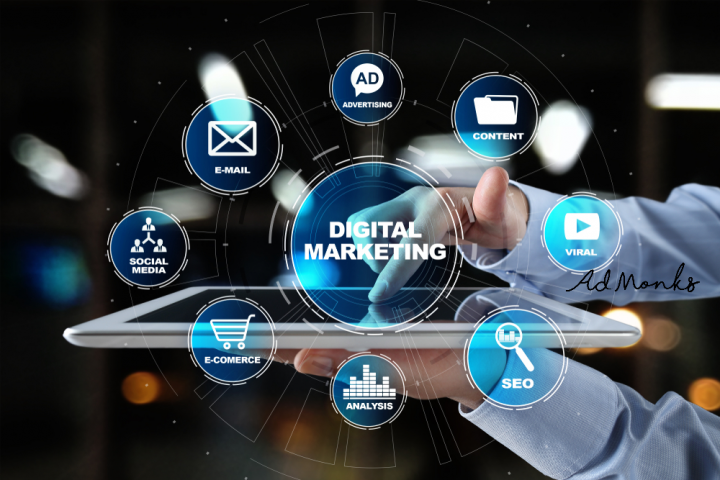
For years, marketing services were bought by channel—SEO, paid media, email, social—each operating in isolation. That structure is breaking down.
Modern growth depends on how information moves across the organization. Insights from paid campaigns inform content strategy. CRM data reshapes targeting. Sales outcomes influence messaging and offers. When these loops are disconnected, learning slows and costs rise. When they are connected, performance improves steadily over time.
Digital marketing in 2026 drives growth by designing and maintaining these systems, not by running isolated campaigns.
Where Growth Actually Comes From in 2026
The impact of digital marketing concentrates in a few critical areas:
- Aligning marketing activity directly with business goals, not vanity metrics
- Improving efficiency by identifying and reallocating underperforming spend
- Building adaptability so performance doesn’t collapse when platforms change
- Creating measurement clarity that leadership can trust
When these elements are in place, marketing becomes a stabilizing force rather than a variable expense.
Data Discipline Is the New Competitive Advantage
Most businesses have no shortage of data. What they lack is discipline.
Dashboards multiply, reports conflict, and attribution models disagree. Teams react instead of plan. Growth stalls not because effort is missing, but because signals are unclear.
The role of digital marketing services has evolved. Value no longer comes from producing more reports, but from simplifying decision-making defining what success looks like, removing misleading metrics, and ensuring teams act on reliable signals.
Rising Acquisition Costs Are Reshaping Growth Strategy
Customer acquisition is more expensive than it has ever been. Increased competition, reduced targeting precision, and audience saturation have driven costs upward across platforms. Simply increasing spend no longer guarantees results.
As a result, growth strategies in 2026 prioritize efficiency over scale. Businesses focus on improving conversion rates, strengthening onboarding, and maximizing lifetime value. Digital marketing plays a critical role in identifying friction points and ensuring every acquired customer contributes more over time.
Retention and Lifetime Value Drive Predictable Growth
Growth that depends solely on new customer acquisition is fragile. In contrast, companies that invest in retention create compounding returns. Repeat customers cost less, convert faster, and generate more stable revenue.
Digital marketing services now extend beyond lead generation into post-purchase engagement, lifecycle messaging, and loyalty optimization. In 2026, sustainable growth is built by keeping customers, not just finding them.
Marketing and Sales Alignment Is No Longer Optional
Disconnected marketing and sales teams create blind spots. When lead quality, pipeline outcomes, and revenue data are not shared, marketing decisions are made in isolation.
High-performing companies treat marketing and sales as a single growth system. Feedback from sales conversations informs messaging. Revenue outcomes refine targeting. Digital marketing services increasingly act as the connective tissue between these functions, improving accuracy and accountability.
AI Accelerates Execution but Doesn’t Replace Strategy
AI has significantly improved the speed of marketing execution. Creative testing, audience modeling, and performance forecasting can now be done faster and at greater scale.
However, automation without judgment creates risk. The strongest growth outcomes come from combining AI efficiency with human oversight. In 2026, successful digital marketing strategies use AI as a multiplier—not a replacement for experience, context, and accountability.
Adaptability Is the Hidden Growth Multiplier
Platforms will continue to change. Algorithms will shift. Privacy rules will evolve. What separates growing businesses from struggling ones is how quickly they adapt without losing momentum.
Digital marketing services that rely on rigid tactics break under pressure. Those built on flexible systems adjust without constant reinvention. Adaptability reduces volatility and protects long-term performance.
Why Ramp Digital Is Built for the 2026 Growth Environment
Ramp Digital helps businesses move beyond fragmented tactics and short-term experimentation. We design marketing systems that prioritize clarity, efficiency, and durability.
Our approach focuses on:
- Building reliable measurement frameworks leadership can trust
- Improving decision quality through clean, actionable data
- Aligning marketing execution with revenue and retention outcomes
- Creating adaptable systems that perform even as platforms evolve
We don’t chase trends. We build infrastructure that compounds.
In 2026, digital marketing is no longer about activity—it’s about architecture. Growth is earned through disciplined execution, aligned systems, and decisions grounded in reality rather than assumptions.
Businesses that invest in structure will experience steadier, more predictable results. Those that rely on tactics alone will continue to face volatility they can’t explain.
Final Thoughts
The future of growth isn’t louder campaigns or bigger budgets. It’s clearer thinking, stronger systems, and the discipline to build for the long term.
Digital marketing has become a growth engine—not because it does more, but because it does what matters.
Ramp Digital exists to help businesses build that engine.